
Price said India's relationship with Russia developed over several decades.

Jet fuel prices on Thursday were hiked by the steepest ever 16 per cent to catapult rates to an all-time high in step with hardening international oil rates.
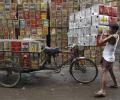
With palm oil having 55 per cent share in total edible oil imports, the National Mission on Edible Oil-Oil Palm (NMEO-OP) would ensure that farmers get all facilities, from quality seeds to technology to promote cultivation of palm and other oil seeds, he said. Modi made this announcement after virtually releasing the ninth installment of Rs 19,500 crore to 9.75 crore beneficiary farmers under the government's flagship scheme PM-KISAN.

Illustration: Uttam Ghosh/Rediff.com After a brief respite at the year's start, FPIs have dumped shares worth more than $5.7 billion (Rs 42,596 crore), taking the cumulative net outflows since October to $10.5 billion (Rs 78,466 crore), and adding to the volatility on the bourses. The figure would have been a lot worse had it not been for net purchases to the tune of $5.7 billion in the primary market from October to date.

For now, the upside appears to offset damage done to exports by weaker global demand.

The Indian Navy, which regards itself as the 'net security provider' in the Indian Ocean Region, has also stepped up to the plate, with a warship stationed at all times off the Gulf of Aden for counter-piracy tasks. 91 Indian warships have been deployed in the region since 2008, patrolling high risk areas where piracy was rampant.

The central government is on track to meet its fiscal deficit target of 6.4 per cent of the GDP for 2022-23 on the back of strong growth in revenue collections, the World Bank said in its India Development Update on Tuesday. High nominal GDP growth in the first quarter supported strong growth in revenue collection, especially Goods and Services Tax (GST), despite tax cuts on fuel. Notwithstanding an increase in spending due to expanded fertilizer subsidies and food subsidies for vulnerable households in response to the commodity price shock, the government is on track to meet its FY22/23 fiscal deficit target of 6.4 per cent of GDP and the general government deficit is projected to decline to 9.6 per cent from 10.3 per cent in FY21/22 and 13.3 per cent in FY20/21.

Markets ended higher, amid firm global cues, and are on track for third straight day of gains.

IndusInd Bank was the top laggard in the Sensex pack, sinking over 12 per cent, followed by Bajaj Finance, ICICI Bank, Axis Bank, M&M, Tata Steel, ONGC and Maruti. On the other hand, Bharti Airtel, Hero MotoCorp and Nestle India were the gainers. NSE Nifty plummeted 280.40 points, or 3.03 per cent, to 8,981.45.

The BSE benchmark Sensex on Wednesday plunged about 275 points to close at 25,246 on across-the-board selling as costlier oil due to rising conflict in Iraq threatens to hurt the India economy.

In the absence of major domestic events, equity markets will be driven by global trends, foreign fund flows and movement in the Brent crude oil, analysts said. The major global events this week are the European Central Bank interest rate decision and China's inflation rate, they added. "Indian equity markets are outperforming most of their global peers and trying to show resilience despite weak global cues.

Powered by a rally in index heavyweight Reliance Industries, equity benchmark Sensex broke its four-session losing run to close above the 55,000-mark on Thursday despite a weak trend overseas. Investors made a cautious return to IT, pharma and bank stocks after their recent sell-off. However, a depreciating rupee and persistent foreign fund outflows capped the gains, traders said. Overcoming a lacklustre start, the 30-share BSE Sensex surged 427.79 points or 0.78 per cent to close at 55,320.28.
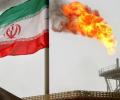
Indian Ambassador to the US Harsh Vardhan Shringla said India has stopped importing oil from Iran after the United States refused to extend exemption from sanctions earlier this month.

India will pay Iran $900 million in two tranches beginning next week to clear part of the past dues for crude oil it buys from the Persian Gulf nation.
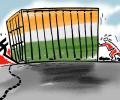
India's exports entered negative territory after a gap of about two years, declining sharply by 16.65 per cent to $29.78 billion in October, mainly due to global demand slowdown, even as trade deficit widened to $26.91 billion, according to data released by the commerce ministry on Tuesday. Key export sectors, including gems and jewellery, engineering, petroleum products, ready-made garments of all textiles, chemicals, pharma, marine products, and leather, recorded negative growth during October. Imports during the month under review rose by about 6 per cent to $56.69 billion on account of increase in the inbound shipments of crude oil and certain raw materials such as cotton, fertiliser and machinery.
On the sidelines of crude oil price rise, Indian oil majors including Reliance Industries, Oil and Natural Gas Corporation and Essar Oil are eyeing exploration opportunities at the oil-rich sand beds of Alberta in Canada. The firms are believed to be drawing up plans in consultation with the central government and considering tie-ups with international firms for sand-oil exploration.

Equity indices failed to hold on to their gains in see-saw trade on Tuesday, ending in the red for the third straight session despite a tentative recovery in global equities. The rupee too bounced back from historic lows, but the overall sentiment remained risk-averse amid concerns over economic recovery in a high interest rate scenario. The 30-share BSE Sensex had a choppy start but gained momentum in mid-session trade. However, it succumbed to selling pressure towards the fag end to close 105.82 points or 0.19 per cent lower at 54,364.85. On similar lines, the broader NSE Nifty declined 61.80 points or 0.38 per cent to finish at 16,240.05.
"They (prices of petroleum products) should be linked to world prices," Planning Commission Deputy Chairman Montek Singh Ahluwalia told PTI when asked about the global crude prices now surging to about $70 a barrel.
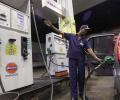
Petrol and diesel prices were on Wednesday hiked by 24-25 paise per litre, the steepest increase since July 5 Union Budget, as a fallout of turmoil in global oil markets following drone attacks on Saudi Arabian crude oil facilities.

Prime Minister Narendra Modi on Friday pushed Russian President Vladimir Putin to end the conflict in Ukraine, saying 'today's era is not of war' even as he called for finding ways to address the global food and energy security crisis.
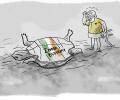
S&P Global Ratings on Wednesday cut India's growth projection for the current fiscal to 7.3 per cent from 7.8 per cent earlier on rising inflation and the longer-than-expected Russia-Ukraine conflict. In its Global Macro Update to Growth Forecasts, S&P said inflation remaining higher for long is a worry, which requires central banks to raise rates more than what is currently priced in, risking a harder landing, including a larger hit to output and employment. S&P had in December last year pegged India's GDP growth in the 2022-23 fiscal, which began on April 1, 2022, at 7.8 per cent.
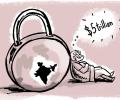
India decisively withstood global headwinds in 2023 and is likely to remain as the world's fastest-growing major economy on the back of growing demand, moderate inflation, stable interest rate regime and robust foreign exchange reserves. Despite widespread pessimism witnessed among the developed nations and the worsening geopolitical situation, India recorded a gross domestic product (GDP) expansion of 6.1 per cent in the March quarter. The growth moved up to 7.8 per cent in the June quarter and was 7.6 per cent in the September quarter. For the first six months of this fiscal, the growth was 7.7 per cent.

The shift comes as the gap between the international benchmark Brent and the Middle East price marker narrows

Escorted by four fighter jets, Russian President Vladimir Putin made a rare one-day lightning tour to the Middle East during which he visited Saudi Arabia after a short trip to the United Arab Emirates.
.jpg)
India Inc raised various issues to increase trade flows in sectors like pharmaceuticals, banking, energy and infrastructure

Gold has held up better than many expected.

New investment projects announced in the manufacturing sector declined in the three months ended June 2023. The value of new projects was lower than in the March quarter, as well as the year-ago period, shows data from project tracker the Centre for Monitoring Indian Economy (CMIE). The new project announcements worth around Rs 85,000 crore in the manufacturing segment in June were a 48 per cent decline from the Rs 1.6 trillion in March and a 66 per cent decline from the Rs 2.5 trillion seen in June 2022.
After consumer price index jumped the 6.3-per cent mark in May and wholesale inflation set a record of 12.94 per cent, house economists at Swiss brokerage UBS Securities have warned that the country is facing more upside risks on the inflation front that is set to averaging at 5 per cent for the year. Rising prices of edible oils and protein rich items pushed retail inflation to a six-month high of 6.3 per cent in May, breaching the comfort level of the Reserve Bank and thus rendering reduction in interest rates a difficult proposition in the near term. Led by petrol price, that has crossed the Rs 100-mark in many states, wholesale inflation too accelerated to a record 12.94 per cent in May. While crude oil has crossed $70 a barrel on account of rising prices of crude oil and manufactured goods due to spike in commodities, and the low base of last year due to the lockdown.

The BSE Sensex and Nifty fell more than 2 per cent on Tuesday, heading for their biggest daily loss since the midst of the rupee crisis in 2013
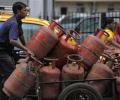
The world's largest cash transfer programme has eliminated around 40 million ghost connections

Amid a war between Russia and Ukraine, Prime Minister Narendra Modi on Thursday said India's several needs are connected to the involved countries but it is on the side of peace and hopes that all problems get resolved through dialogue.

The record contraction in the growth rate of eight core sectors will have its impact on IIP.
Petrol prices are the most volatile across the world.

'As matters stand, Russia and Saudi Arabia, two of the world's biggest oil producers, are set for a hard landing as they didn't diversify their economies as much as they should have when the oil prices were booming.'

India also went on an overdrive in expanding its military engagement with like-minded countries in its neighbourhood and beyond in the face of China's relentless attempts to become a regional hegemon and establish its primacy in South Asia.

The Russian-Ukraine war can hit the global supply chains that are already constrained due to the pandemic and the worst impact will be on ongoing chip shortage because the warring nations brutally control supplies of key raw materials that go into making semiconductors, warns a report. Since Russia controls as much as 44 per cent of global palladium suppplies, Ukraine produces a significant 70 per cent of the global supply of neon -- the two key raw materials that go into making chips. The markets can expect the global chip shortage, that began with the pandemic, to worsen if the military conflict lingers on, says a Moody's Analytics report on Friday.
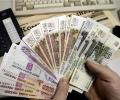
The rouble has been falling steadily since early November and collapsed earlier this month following a spectacular decline in the price of crude oil to five-year lows.
Demand, supply imbalance and taxes influence petrol and diesel prices.

Saudi Arabia has agreed to provide US$ 4.2 billion worth of assistance to cash-strapped Pakistan to support its economy, it emerged on Wednesday after Prime Minister Imran Khan held talks with Saudi Prince Mohammad bin Salman in Riyadh this week.
 © 2026 Rediff.com - Investor Information - Advertise with us - Disclaimer - Privacy Policy - Sitemap - Feedback - About us - Terms of use - Grievances